Knesset Vote: Israel Faces Election Without Clear Majority
Polls indicate a stalemate is likely, forcing negotiations or a third election cycle as the war continues.
By Nathan Brooks ·
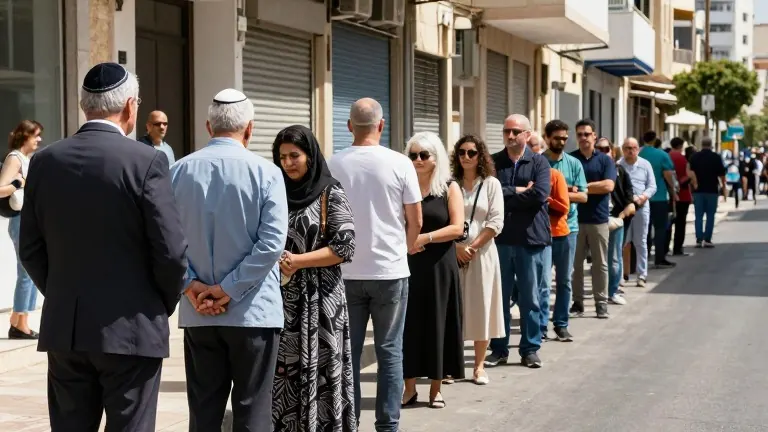
Israelis cast ballots on Tuesday in a parliamentary election where polling data suggests neither major political bloc will secure the 61 seats necessary to form a majority government. The vote occurs against the backdrop of an ongoing multi-front war that has consumed the country since the Hamas attacks of October 7, 2023.
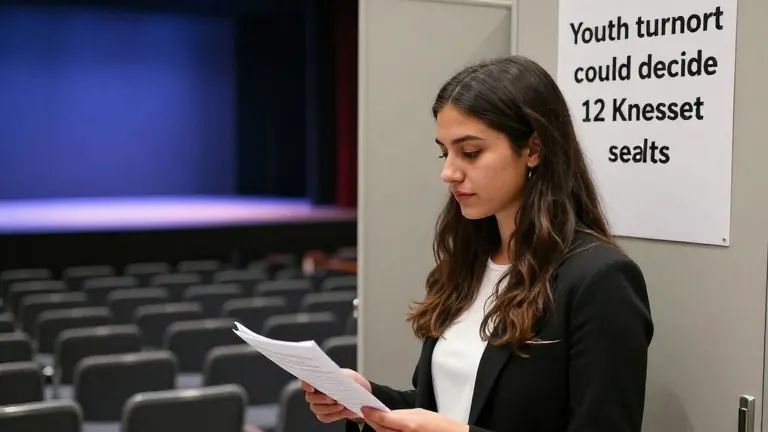
The race pits Prime Minister Benjamin Netanyahu and his right-wing and religious allies against a diverse coalition of opposition parties known as the change bloc. Most polls indicate that neither side will command a decisive victory in the 120-seat Knesset. This lack of a clear winner creates the possibility of protracted coalition negotiations, the formation of a minority government, or a repeat election.
Netanyahu, the longest-serving prime minister in Israel's history, argues that only he can build a stable government without relying on Arab parties. He also contends that he requires additional time to complete military operations in Gaza, Lebanon, and Iran. President Donald Trump endorsed Netanyahu last week, stating that the United States would have to conduct the war against Iran itself if Netanyahu lost power.
Challenging the incumbent is Gadi Eisenkot, the former military chief of staff who leads the centrist Yashar party. Eisenkot, who lost family members in Gaza, proposes a state inquiry into the intelligence failures behind the 2023 attacks, a measure Netanyahu has blocked. His campaign emphasizes national unity and positions him as a pragmatic alternative to the current leadership.
Two variables could shift the electoral outcome. The first is voter turnout among Arab Israelis, who comprise approximately 20% of the population. Yohanan Plesner, president of the Israel Democracy Institute, noted that high turnout in this demographic makes it harder for Netanyahu to form his preferred coalition. The second variable involves two new parties focused on mandatory military service for ultra-Orthodox citizens. Both parties hover near the electoral threshold, and their performance could tip the balance of power.
If no bloc achieves a majority, Israeli political precedent offers several paths forward. Lawmakers may switch sides to form a coalition, a common occurrence in the region's political history. Alternatively, the change bloc could attempt to form a minority government by securing more seats than the opposition, even if that number is below 60%. Arab parties could facilitate this by abstaining or voting in favor of such a government.
Should negotiations fail to produce a governing body, the country will hold new elections. This scenario has occurred frequently in recent years. Between 2019 and 2022, Israel held five elections due to similar deadlocks. Plesner observed that while most politicians prefer to avoid a repeat vote, the current alignment of political interests makes a third election within a short timeframe a plausible outcome.
Source: CBS News