
Netanyahu Faces Eisenkot as Israelis Vote in Parliamentary Election
More than 7 million eligible voters are deciding between the longtime prime minister and former military chief Gadi Eisenkot.
By Salma Farouk ·
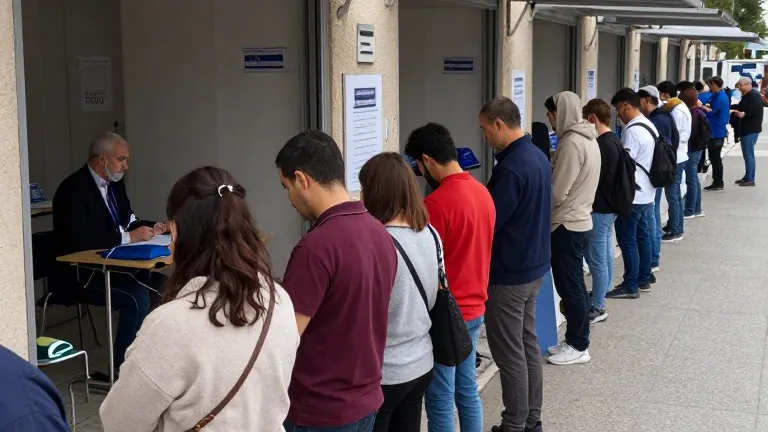
Benjamin Netanyahu campaigned against Gadi Eisenkot on Tuesday as Israelis opened polls for a parliamentary election shaped by the wars that followed the Oct. 7, 2023, attack. The prime minister's record and the country's direction were on the ballot. More than 7 million people were eligible to vote.
No party has ever won an outright majority in Israel's parliament, so coalition talks follow the count. Neither Netanyahu's religious and ultranationalist bloc nor the parties lined up behind Eisenkot was assured of reaching that threshold, which could leave negotiations running for weeks before a leader is named. Arab-led parties pushing for high turnout could hold the balance if they back one candidate and other parties join them.
Mansour Abbas, who leads the Islamist Ra'am party, voted Tuesday and said, "Our vote will change the government." He set a target of turnout above 70% in Arab communities. National security minister Itamar Ben-Gvir, who has taunted Palestinian detainees and said some Palestinians in Gaza are "not even people," said after voting, "it will be Mansour Abbas' government" if Netanyahu and his allies fall short.
In Kiryat Shmona, a Netanyahu stronghold near the Lebanese border, a man kicked and tore down a poster of Eisenkot as polls opened. In Tel Aviv, families of those killed on Oct. 7 and former hostages held a moment of silence before voting began. Yona Adam, whose daughter Mapal Adam was killed, said, "Remember all those whose voices are no more."
Netanyahu appeared in a video this week beside a missile-defense battery and warned Tehran it would face "a devastating blow" if it attacked Israel. Eisenkot spent Tuesday morning visiting communities hit on Oct. 7. "If someone in the government had a shred of responsibility, they would start the morning here in the Gaza envelope," he said. Netanyahu had not appeared publicly three hours after polls opened.
About 330,000 young Israelis were eligible to vote for the first time, many facing compulsory military service during the war. Tens of thousands of voters living overseas reportedly flew to Israel to vote.
Supporters call Netanyahu a steady hand who guided Israel through multiple wars while protecting its Jewish identity and holding back what they view as an interventionist judiciary. His critics, pointing to his corruption trial, say he prolonged the war in Gaza and the hostage crisis for political reasons, weakened the judiciary, and allowed ultra-Orthodox men to avoid enlistment. Eisenkot's backers cite his security background and his work with partners who would restore Israel's standing abroad, conscript ultra-Orthodox men, and preserve the judiciary's independence. His son and two nephews were killed in Gaza.
Voter Nisso Shitrit in Jaffa framed the choice this way: the election is about "who serves and who evades service, who takes an active part in building this country and who doesn't." Israel's first national vote since the Oct. 7, 2023, attack was underway across the country Tuesday.
Source: KXAS-TV · original report published