Antwerp Seizes Record 21 Tonnes of Canadian Cannabis
Belgian customs officials report a surge in illicit exports driven by price differentials between North America and Europe.
By Sergio Ramirez ·
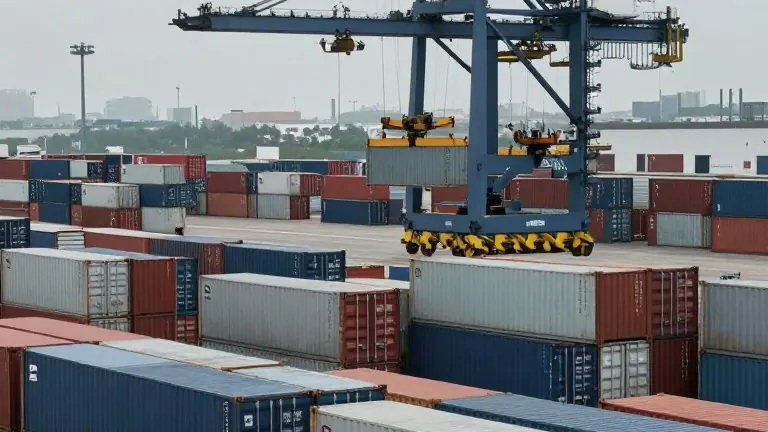
Belgian customs officers seized a record 21 tonnes of Canadian cannabis at the port of Antwerp in 2025, a volume that surpassed illicit exports from every other country, including Morocco. Kristian Vanderwaeren, the director general of the Belgian Customs and Excise, attributes the surge to the price gap created by Canada's 2018 legalization. He stated that smugglers exploit the policy to ship product to a market where 320 million Europeans have the means to purchase it. The Belgian official described the European market as immense compared to the domestic Canadian market.
The financial incentive for criminal organizations is substantial. Europol reports that the average wholesale price for a kilogram of Canadian marijuana in the Netherlands is approximately 4,100 Euros, while in the United Kingdom it reaches 6,000 Euros. In contrast, the Royal Canadian Mounted Police estimate the domestic wholesale price in Canada averages between 1,000 and 1,500 Canadian dollars. Street prices in Europe are higher than these wholesale figures. This margin allows smuggling networks to generate profits that are difficult to achieve through other illicit trades.
The Canada Border Services Agency confirmed intelligence showing a sustained increase in illegal export attempts since 2022, with Europe as the primary destination. CBSA agents seized about 34 tonnes of cannabis products intended for export at maritime border points in 2025. The agency noted that shipments arrive via cargo, postal services, and air passengers. Vanderwaeren initiated contact with the CBSA after noticing a spike in seizures in 2024, which led to a red alert and a letter of intent signed by customs heads from Canada, Belgium, France, and the Netherlands to cooperate on enforcement.
Smugglers use increasingly creative methods to hide the product. In one case, agents found marijuana vacuum-packed inside hollowed-out juke boxes hidden among a family's household belongings in a container bound for France. In another, they discovered crates of one-kilogram pouches concealed behind a facade of wooden fire briquettes. Sara Van Cotthem, a communications officer with Belgian customs, said agents inspect only one to two percent of the 13.5 million 20-foot containers that pass through the port annually. They rely on scanners, drug-sniffing dogs, and artificial intelligence to detect anomalies.
The influx of supply has altered the dynamics of drug trafficking in Belgium. Seizures of marijuana at Antwerp have overtaken those of cocaine for the first time. Ine Van Wymersch, Belgium's drug commissioner, described the situation as a supply-driven market where criminal groups exploit a gray zone in Canadian regulation. She noted that Brussels has recorded 74 shootings this year, a figure she links partly to cannabis-related violence. Van Wymersch emphasized that the problem is global and requires coordinated action rather than blame.
Europol stated that the high potency and low production cost of North American cannabis ensure the illicit trade will likely persist. The agency warned that the profits generated fund other criminal activities. In a recent trial in Berlin, ten men were convicted for smuggling marijuana from Canada to Germany, with the three main defendants receiving sentences ranging from six and a half to 15 years in prison. The judge ruled that the group used a front company to move 1.1 tonnes of cannabis in containers labeled as timber. Vanderwaeren reported a slight decrease in seizures in recent months, which he credits to the increased efforts by the CBSA.
Source: CBC News