Hispanic Vote Shifts in 64 Counties
Economic pressures and immigration enforcement drove a 14-point drop in Republican support among Latino-majority jurisdictions.
By Adrian Parker ·
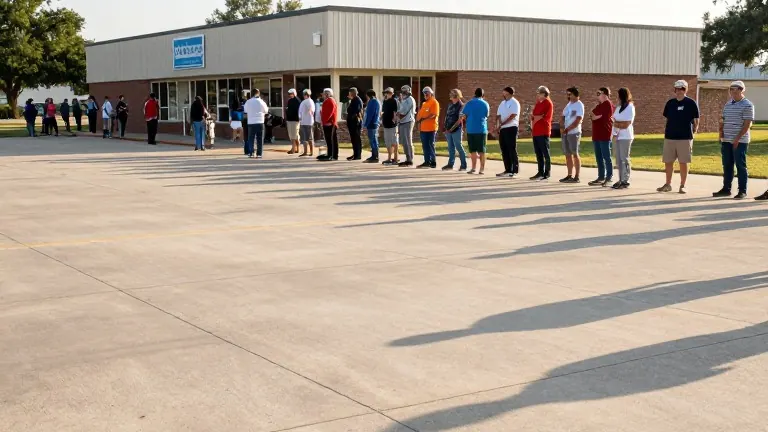
Republican candidates lost ground in 64 Latino-majority counties across the United States during the November 3, 2026, midterm elections. A Reuters analysis published on November 5 shows that support for Republican Senate candidates in these areas declined by 14 percentage points compared to the 2024 elections. This shift exceeded the national trend for the same period.
Hidalgo County in Texas experienced the sharpest drop, with Republican support falling by approximately 25 points. In Miami-Dade County, Florida, a jurisdiction Donald Trump won in 2024, the decline was 10 points. The change in voting behavior was not limited to border regions. Shifts also appeared in agricultural and livestock areas of Kansas, as well as in counties in Colorado and Arizona.
Economic concerns remained the primary issue for Hispanic voters, according to exit poll data from SSRS. Forty-five percent of Hispanic voters identified the economy as the most important problem in the country. Prices for food, fuel, and general cost of life weighed heavily on decisions during the election. However, fear and rejection of immigration enforcement measures also played a role.
Geronimo Perez, a 56-year-old voter in Fort Worth, Texas, cited both economic strain and immigration policy in his decision. Perez voted at the Worth Heights Community Center in South Fort Worth. He said that a friend was deported one week before the election. Perez voted for the full Democratic ticket, including Gina Hinojosa, who won the Texas governorship, and James Talarico, who won the federal Senate seat. Perez stated, 'I represented my family, my culture. The United States is made up of immigrants of different colors.'
The surge in Hispanic voter turnout contributed to Democratic victories in both chambers of Congress. Janet Murguía, executive director of UnidosUS, a Latino civil rights organization, estimated that up to 14.5 million Hispanic voters participated nationwide. Murguía described this as a record number. She said, 'Latino voters sent a clear message about their anger and concern about the direction of our country.'
Immigration enforcement actions in Kansas also influenced local voting patterns. Three traditionally Republican counties in southwestern Kansas, Ford, Finney, and Seward, shifted their support to Democratic candidates in the Senate race. In September, Immigration and Customs Enforcement agents conducted operations in these areas. State authorities reported that more than 100 people were detained during these actions. The raids disrupted meat processing plants and delayed the shipment of thousands of head of cattle, according to livestock industry associations.
Data from the IKE Lab, a research project at Wichita State University, showed that these three counties recorded some of the five largest increases in new voter registrations in Kansas. Angelica Plata, a community organizer for New Frontiers, said that discontent among residents was evident. Beatriz Lopez, executive director of Voto Latino, said the challenge now is to maintain political participation. Lopez advised parties to invest in the Latino vote if they wish to sustain momentum through the 2028 election cycle.
More Politics · Dallas news · Report a business · Got a Story?