Trump Vows Veto Power After Democrats Take Both Chambers
Despite losing congressional control, the president retains executive tools to block legislation and direct foreign policy until his term ends in January 2029.
By Daphne Turner ·
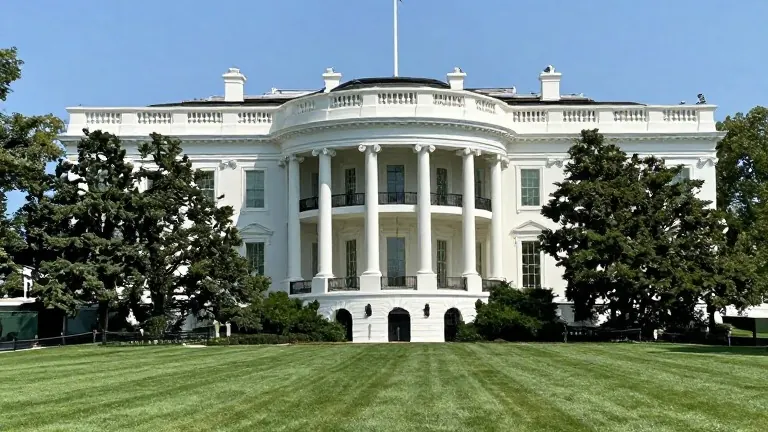
President Donald Trump retains the unilateral power to block legislation passed by the new Democratic-led Congress, a capability he signaled he would use frequently following Tuesday's midterm elections.
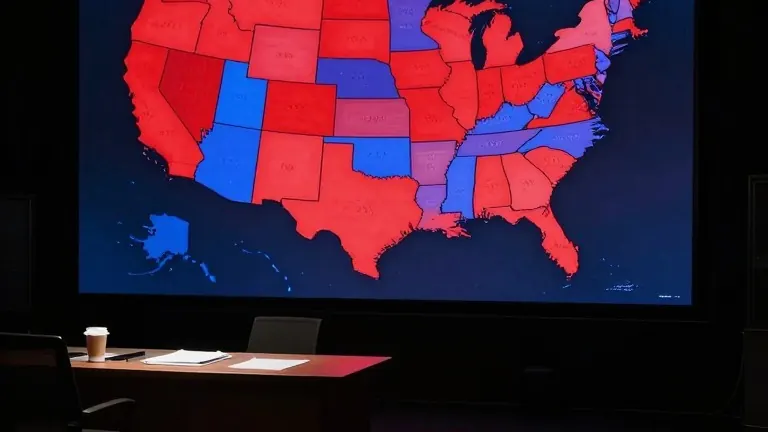
Democrats flipped enough seats to secure majorities in both the House and Senate, ending Republican control of the legislative branch. The shift removes the party advantage Trump previously leveraged to shape the national agenda. With his exit from office now firmly scheduled for January 2029, analysts argue his influence over domestic policy is already diminishing.
Trump reacted to the results with a mixed message. In posts on Truth Social, he attributed the Republican losses to his absence from the ballot, claiming Republicans would have won in a landslide had he been a candidate. In an interview with The New York Times, he stated he was absolutely willing to accept the results and work with Democrats. He simultaneously posted an image of a red hat with the word VETO replacing his usual slogan, signaling his intent to use his constitutional authority against the new Congress.
The term lame duck typically describes the period after an election when an outgoing leader's power wanes. While traditionally associated with the final months of a term, the definition has expanded to include periods where a politician's scheduled departure reduces their ability to influence policymaking. Pundits suggest Trump is entering this phase with two years remaining because the midterm losses were interpreted as a repudiation of his policies.
Critics argue that with Democrats leading both chambers, the president's ability to cajole fellow Republicans into supporting his initiatives is curtailed. However, historical precedent shows that presidents in this position are rarely powerless. They often focus on areas where the executive branch holds autonomous authority, particularly foreign policy and emergency powers.
Trump has a history of using executive orders to bypass legislative gridlock. In January 2025, when Congress allocated less funding for border security than requested, he declared a national emergency to divert billions of dollars toward building a physical barrier. Congress can terminate such an emergency with a joint resolution, but Trump can veto that resolution. Overturning a presidential veto requires a two-thirds majority in both chambers, a threshold Democrats do not currently command.
James Boys, a research fellow at the Centre on US Politics at UCL, noted that many issues remain beyond the reach of Congress. He predicted Trump would spend much of his remaining time focusing on foreign policy, where the Constitution grants wide-ranging powers. This strategy mirrors the approach of previous presidents who faced divided governments.
Barack Obama finalized the Iran Nuclear Deal and normalized relations with Cuba after Republicans took Congress in 2014. He also defended the Affordable Care Act during his final stretch. Bill Clinton used his executive authority to protect 58.5 million acres of forestland and restrict mining on federal lands. He also hosted the Camp David Summit in 2000 to broker peace between Israelis and Palestinians, though the talks eventually collapsed.
Joe Biden entered a similar period after announcing he would not seek re-election in 2024. In his final days, he issued a federal pardon for his son and other family members. He also granted Ukraine permission to use US-supplied missiles for strikes deeper inside Russia and directed the Department of Defense to disburse the remainder of a $61 billion aid package to avoid its cancellation by the incoming administration.
Trump told Fox News on Tuesday that he would veto all insane legislation from Democrats. He predicted that after a couple of months of vetoes, Democrats would seek to work together. The president's stated willingness to collaborate contrasts with his recent emphasis on his veto power.