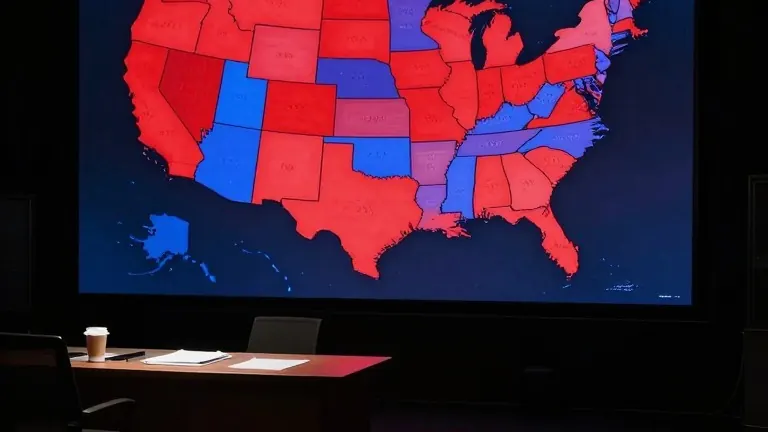
Democrats Projected to Win Both Chambers of Congress
The party captured the Senate and is expected to hold the House, with surprising results in traditionally Republican states.
By Sergio Ramirez ·
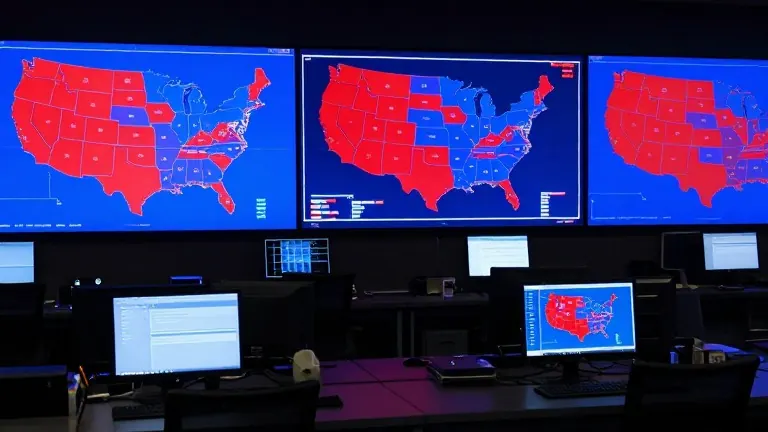
CBS News projected that Democrats would take control of the House of Representatives just after 03:00 GMT on Wednesday. This follows their confirmed victory in the Senate. The Democratic gains in the upper chamber exceeded pre-election expectations, securing seats in several states that had voted Republican for decades.
South Carolina, which last elected a Democratic senator in 1998, is a major factor in the Senate shift. Pre-election polls indicated the state leaned Republican. Kansas, which has not sent a Democrat to the Senate since 1932, also flipped. North Carolina, Texas, Iowa, Ohio, and Maine also turned blue. CBS News reported that one seat in Alaska remains undecided and the race in Mississippi is close.
The change in vote share was visible in states like Texas. Recent data shows the state moved nine points toward Democrats compared to the 2024 Senate race. In the House, the Democratic Party is securing the necessary seats to claim control while aiming for a larger margin of victory.
The results in Florida districts 14 and 25 are notable. Democrats retained these seats, which complicates the Republican effort to redraw district boundaries. Previous redistricting efforts had shifted these areas from having a majority of Kamala Harris voters in 2024 to a majority of Donald Trump supporters. Democrats also won district 22, another area redrawn to favor Republicans.
Hispanic voters in Florida appear to have played a decisive role in the Senate race. Polling data indicates that 55% of this group supported Democratic candidate Angie Nixon, compared to 44% for Republican Ashley Moody. This represents a shift from 2024, when an estimated 55% of Hispanic voters supported Donald Trump.
The economy emerged as the primary concern for voters nationwide, followed by the state of democracy. When asked if Donald Trump's policies affected economic conditions, more than two-thirds of respondents believed things had worsened. The results were reported by a team including Wesley Stephenson, Christine Jeavans, and Daniel Wainwright.