
69 Dead in Spanish Train Crash: Four Americans Identified
Authorities confirmed the nationalities of victims in the Toledo collision, which occurred just weeks before national elections.
By Sergio Ramirez ·
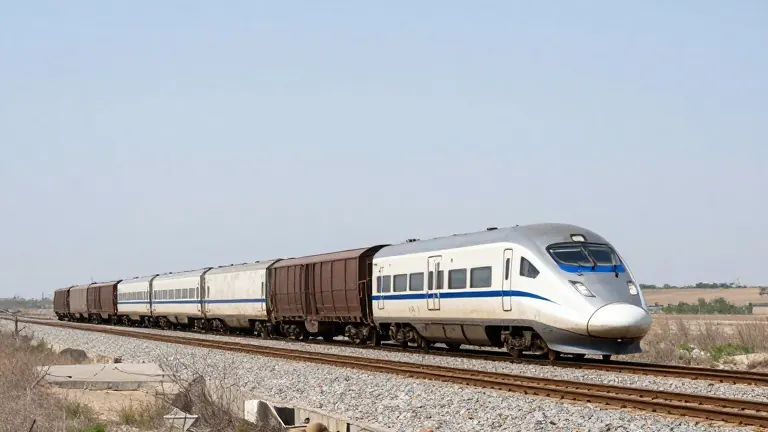
Four United States citizens and one Canadian were among the 69 people killed in a high-speed train collision in Spain last week. Authorities announced the nationalities of the victims late Sunday, November 1. They have now identified 66 of the deceased. Most of the victims were Spanish citizens. The remaining identified foreign nationals included individuals from France, Japan, Argentina, Mexico, Portugal, Tunisia, and the Czech Republic.
Three people remained missing as of Sunday. Authorities listed them as two Australians and one Japanese national. The crash happened on Wednesday in the province of Toledo. A moving high-speed train struck another train that was stopped on the tracks. The incident marks the second major disaster on the Madrid to Seville line in nine months. A previous collision in the same corridor killed 49 people after a train derailed and hit an oncoming service.
Spanish Prime Minister Pedro Sánchez visited the crash site on Friday. He acknowledged that public trust in the rail system has broken down. The government promised to investigate the causes and offer solutions to prevent future tragedies. Sánchez stated that the government must do more than diagnose the problem. He said they must provide fixes so a tragedy of this magnitude does not happen again. The rail network carried approximately 45 million passengers last year, including millions of tourists.
The timing of the accident creates political pressure for Sánchez. General elections are scheduled for November 29. He has led the government for eight years and seeks to extend his term. Questions about infrastructure investment and rail safety are now central to the campaign. The crash occurred one month before voters go to the polls.
Spain has built 3,900 kilometers of high-speed rail lines since 1992. The network serves a population of 49 million. Only China has a larger high-speed rail network according to the International Union of Railways. The trains operate at speeds greater than 250 kilometers per hour. This infrastructure has drastically reduced travel times between Madrid and coastal cities. The Madrid to Barcelona trip, which used to take seven hours, now takes two and a half hours.
Nine of the 13 million trips between Madrid and Barcelona in 2024 were made on high-speed trains. Passenger numbers on these lines doubled between 2019 and 2025. However, critics argue that investment in high-speed lines has come at the cost of slower commuter services. Railway workers' unions say the government has not spent enough on network maintenance. Delays and breakdowns have become common complaints among regular passengers.
Travelers on the system report mixed feelings about safety. Some admit their confidence has shaken after the accidents in Adamuz in January and Urda this week. Others feel safer because authorities are likely paying closer attention after the crashes. One data analyst riding a train from Zamora to Madrid said he felt more secure than usual. He noted that the highest level of caution occurs immediately after a tragedy. He believed the staff would be concentrated and attentive during this period.