Ohio State Uses Data to Tune Rowing
Assistant coach Emilia Fritz explains how telemetry systems and engineering principles replace traditional intuition in the Buckeye shell.
By Adrian Parker ·
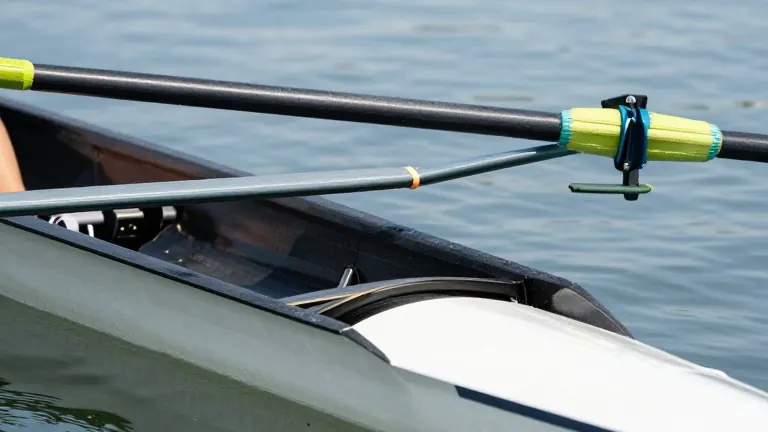
Ohio State rowers are no longer relying solely on intuition to optimize their speed. The program now employs Peach PowerLine, a telemetry system that tracks individual strokes to capture precise force data during races. This technology allows coaches to measure specific mechanical details that were previously left to the subjective assessment of a coach's eye or a rower's feel.
Emilia Fritz, the team's assistant coach and data optimization engineer, stated that collecting these numbers is only the initial step. The objective is to create a highly individualized experience for every athlete. Fritz noted that the potential for customization is often overlooked, but the goal is to make the rowing boat as personalized as possible for each team member.
The data informs how the boat is rigged. Fritz explained that there are approximately 20 variables involved in adjusting the equipment. By changing these settings, the coaching staff can find the optimal configuration for each specific rower. This approach acknowledges that while the eight athletes work toward the same goal, their physical attributes and techniques differ, requiring distinct setups to transfer force efficiently.
Sophomore Katerina Dohnalová, an engineering physics major, connected her athletic experience to her academic studies. She began rowing at age 11 and initially learned physics principles through the sport. Dohnalová observed that when rowers apply force in the same direction simultaneously, their efforts combine to move the shell more efficiently. She now understands the physics behind the synchronization that coaches have long emphasized.
Mechanical engineering student Giulia Zaffanella also emphasized the value of precise adjustments. She stated that she can feel when the boat is not performing correctly, but the collected data helps identify specific equipment or technique changes to improve efficiency. Zaffanella argued that a higher degree of personalization leads to greater efficiency for the athlete.
The coaching staff balances quantitative data with qualitative feedback. Fritz said the team avoids making decisions based solely on numbers because data can sometimes be incorrect. Dohnalová cited the ergometer, an indoor rowing machine, as a limitation of current technology. She noted that ergometers do not float and cannot fully replicate water conditions such as resistance, balance, and team synchronization. Consequently, strong individual results on land do not always translate to a faster boat on the water. Dohnalová described the current process as a shift from relying on coaching intuition and rower sensation to translating those elements into documented data.