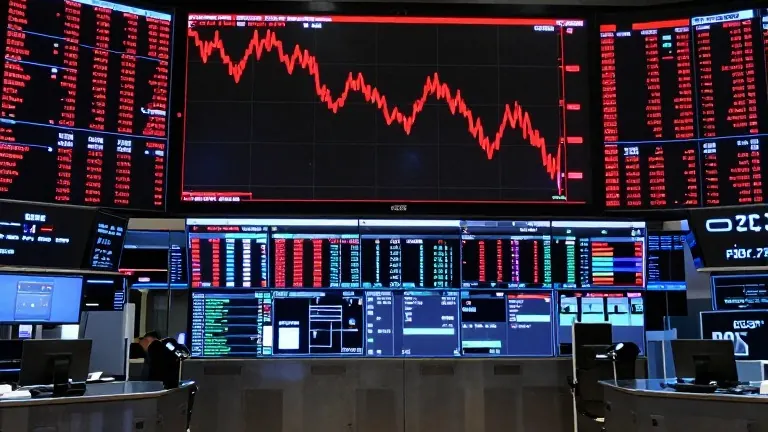
Nvidia CEO Resignation Triggers Market Volatility
Investors absorbed a 14% plunge in Nvidia shares and a jump in oil prices, allowing major U.S. indexes to erase early losses by midday.
By Sergio Ramirez ·

The U.S. stock market recovered from a sharp early selloff on Thursday after absorbing volatility linked to the resignation of Nvidia CEO Jensen Huang and rising crude oil prices. The S&P 500, which dropped nearly 1% at the open, closed the gap to finish only 0.2% lower. The Dow Jones Industrial Average remained mostly unchanged as of 1:54 p.m. Eastern time, while the Nasdaq composite fell 0.3% after recovering from an initial 1.6% decline.
Nvidia shares plunged 14% at the start of trading following the board's announcement that Huang, the company's co-founder and chief executive, has resigned. The board named Chief Financial Officer Colette Kress as interim CEO. The stock had already fallen 27% from its record high set last month through Wednesday amid uncertainty over Huang's future after the board launched an investigation into his relationship with a woman suspected of being a Chinese government agent. By the afternoon, Nvidia's loss narrowed to 5.1%.
Other technology stocks moved in opposite directions, reflecting mixed sentiment about the artificial intelligence sector. CoreWeave, which rents access to Nvidia chips, fell 7.3%, while Micron Technology dropped 2.4%. In contrast, Broadcom rose 5.5% and Advanced Micro Devices gained 4.7%. Analysts suggested these gains indicated investors view the AI industry as expanding beyond Nvidia rather than relying solely on the chip giant.
Oil prices climbed after President Donald Trump stated he is no longer interested in a deal with Iran to end their war. Trump said he asked his vice president to investigate U.S. cities and states run by Democrats. A barrel of Brent crude, which traded around $92 before the presidential comments, rose to $95.18 in afternoon trading, a 2.6% increase. The price has fluctuated sharply since the conflict began in late February, ranging between roughly $70 and $120.
Rising oil prices contributed to higher yields in the bond market. The yield on the 10-year Treasury climbed to 5.11% from 4.98% late Tuesday, as the bond market was closed Wednesday for Veterans Day. Higher yields increase borrowing costs for the government, companies building AI data centers, and consumers. Mortgage rates have slowed sales of previously occupied U.S. homes in October to their lowest pace in more than 16 years.
Global markets showed mixed reactions. In Europe, indexes finished at various levels following a weaker session in Asia. Hong Kong's Hang Seng index fell 1.3%, marking one of the largest moves globally. In the U.S., initial jobless claims rose slightly last week, but the number remains low compared to historical averages. The housing industry continues to slow the U.S. economy without causing a major collapse.
More Business · Business Complaints · Report a business · Got a Story?