FAA halts all US departures
The third nationwide ground stop in history forces passengers to navigate new refund rules and connection risks.
By Nathan Brooks ·
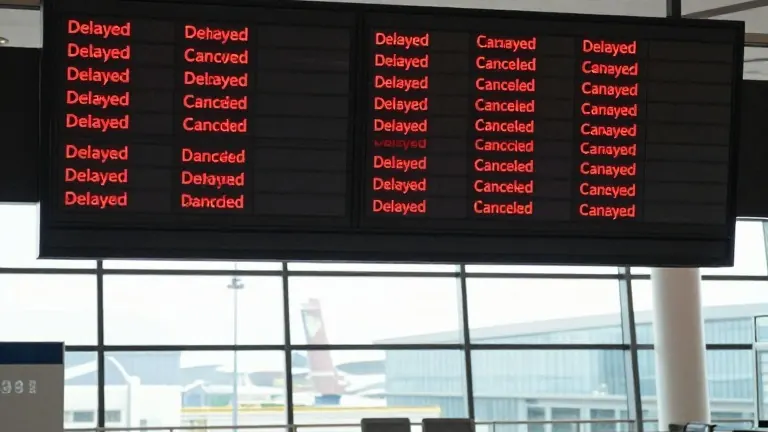
The Federal Aviation Administration ordered a nationwide stop to all departing flights on Friday, November 13, 2026. The agency cited safety concerns and extraordinary circumstances after reporting issues with air traffic control communications. This is the third time in history that all U.S. departures have been halted. The previous instances were the September 11, 2001, attacks and a January 11, 2023, failure of the FAA’s Notice to Air Missions system. Flights already in the air were permitted to land, while international departures are being evaluated on a case-by-case basis.
Passengers with canceled flights are entitled to a refund under U.S. Department of Transportation rules if they decide not to travel or accept an alternative. This applies even to nonrefundable tickets. If a passenger has already flown part of the trip, the refund generally covers only the unused portion of the fare. Airlines may offer vouchers or rebooking, but travelers are not required to accept a voucher instead of a refund for the disrupted flight.
A refund is also available if an itinerary change is substantial. For domestic flights, this includes a revised arrival time at least three hours later than originally scheduled. For international flights, the threshold is six hours. Other qualifying changes include a departure time shift of at least three hours domestically or six hours internationally, or a change to a different origin or destination airport. The calculation for these delays relies on the final destination arrival time, not the departure time of the first leg.
Missing a connection does not automatically trigger a refund. The outcome depends on the final revised itinerary. If a short delay on the first flight causes a passenger to arrive four hours late to their domestic destination, that delay meets the threshold for a significant change. If the passenger declines the new schedule or an alternative, a refund for the unused transportation may be due. Passengers who booked connecting flights on separate tickets face more complexity. The second airline is not automatically obligated to rebook or refund the second ticket if the first carrier was delayed.
Airlines are not federally required to provide hotels, meals, or cash compensation for every disruption. While some carriers offer assistance for disruptions within their control, an FAA ground stop is generally considered an external factor. Travelers should ask the airline how it classifies the delay and whether assistance applies. If paying for lodging or meals out of pocket, passengers should get reimbursement terms in writing and keep all receipts.
Refunds are generally due within seven business days for credit card purchases and 20 calendar days for other payment methods. Airlines must also refund fees for paid services, such as seat selection or Wi-Fi, that were not provided. If a refund is not processed, passengers can file a complaint with the Department of Transportation. The agency expects airlines to acknowledge complaints within 30 days and provide a substantive response within 60 days.