BofA Strategist Sees AI Boosting Quantum Computing
Haim Israel predicts the industry will reach $15 billion by 2030 and argues that artificial intelligence is currently solving key engineering problems in quantum systems.
By Daphne Turner ·
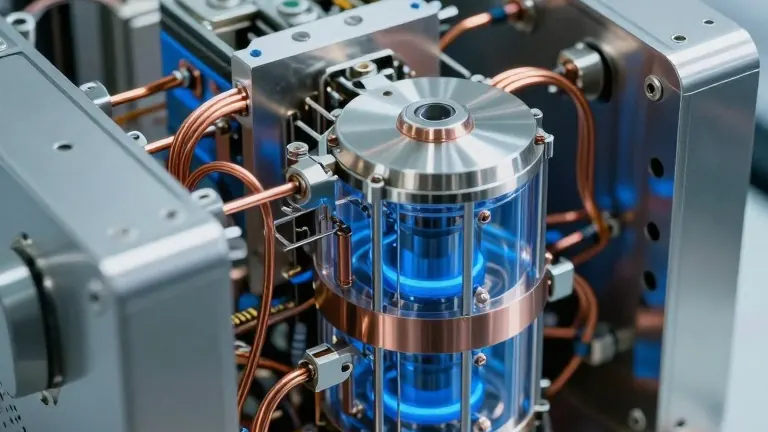
Bank of America global strategist Haim Israel stated that artificial intelligence is accelerating progress in quantum computing. Israel, who leads the bank's global thematic research team, told The Jerusalem Post that the two technologies are now driving each other forward. He noted that quantum computing had remained in the background for years while AI dominated public attention, but that dynamic has shifted recently.
The bank projects that the quantum computing industry, which currently generates over $1 billion in annual revenue, will grow to roughly $15 billion by the end of the decade. Bank of America analysts further estimate the market will reach $80 billion by 2035. The institution has also revised its timeline for Q-Day, the point at which quantum computers could break standard encryption methods, to 2030.
Israel explained that conventional computers process data as binary bits, whereas quantum computers use qubits that rely on superposition. He said that qubits have historically been difficult to control because they are highly sensitive to their environment, leading to high error rates. According to Israel, AI tools are now helping researchers manage these systems more effectively and reduce those errors. He identified 2022 as the inflection point where qubit stability improved and error rates declined.
The strategist argued that this relationship is critical as AI models become larger and more resource-intensive. He stated that quantum computers could eventually perform complex calculations that are too slow or costly for traditional machines. Israel described the current state of the field as similar to the period before ChatGPT popularized generative AI, saying, "We are before the ChatGPT moment of quantum."
Israel observed that the quantum sector already possesses a developed ecosystem of hardware and software providers, along with start-ups focused on encryption. He predicted the technology will remain concentrated in specialized systems rather than becoming a mass-market product for billions of users. Potential applications include healthcare, financial services, chemicals, energy, industrial production, and logistics.
Concerns regarding oversight remain, according to Israel, who noted that there is limited government intervention in the space. He compared the situation to nuclear energy, where the technology can serve both beneficial and destructive purposes. While companies are developing internal safeguards, he said governments are struggling to keep pace with rapid technological changes.
Israel concluded by describing the technology as neutral, stating, "The technology is parve. It's a question of what we do with it." He added that if used correctly, the impact on various sectors could be positive, leaving the outcome dependent on human decision-making.