First Mandate Passport Marked Century
Avraham Saide, a Jerusalem resident, obtained the first registered British-Palestine passport in 1925 while living in Argentina.
By Daphne Turner ·
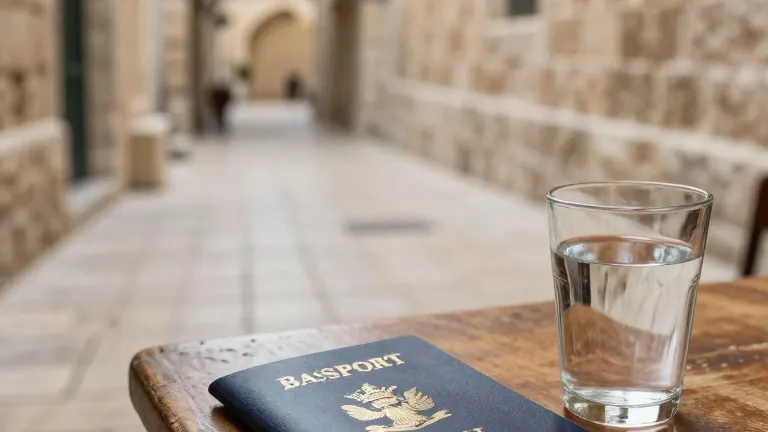
On November 3, 2026, descendants of Avraham Sade marked the 100th anniversary of his receipt of the first registered British-Palestine passport. The document was issued by the British Consul in Buenos Aires in 1925. Sade, born Avraham Saide in 1906, lived through three distinct political regimes in Jerusalem. He died in 1993 at the age of 87.
Sade was born in the Kikar Hatulim neighborhood during the late Ottoman period. His family was impoverished, often collecting discarded meat and stale bread from Ottoman barracks near the Jaffa Gate. His mother, Esther, died of tuberculosis in 1910 at age 24. His father, Sion, later remarried and fathered seven more children. Sade left Jerusalem at age 17 to find his father’s relatives in Aleppo, Syria.
He traveled to Buenos Aires, Argentina, to join his Syrian Jewish cousins. During his second visit, he secured the historic passport after the British Government passed the Palestinian Citizenship in the Mandate Act in 1925. Golda Meir and David Ben-Gurion were also among the early recipients of this document. Sade returned to Palestine and sold cloth to earn income. He traveled to Alexandria via a Bedouin caravan to bypass the colonial railway.
In Alexandria, Sade met 15-year-old Mazal Fortuna at a synagogue. The family, described as enthusiastic Zionists, invited him to a Shabbat meal. Mazal was originally engaged to another man, but the family preferred Sade because he hailed from Jerusalem. The couple married and returned to Palestine with their first son, named Sion after the living grandfather. The 1929 Arab riots in Jerusalem, Safed, and Hebron soured Sade’s view of British rule.
The family lived in Petah Tikvah before returning to Jerusalem. Sade opposed the British presence, a stance reinforced by the 1937 Peel Commission Report, the 1938 Woodhead Commission, and the 1939 White Paper. The White Paper limited Jewish immigration to 15,000 per year. Sade feared Britain was reneging on the 1917 Balfour Declaration. The advance of Field Marshal Erwin Rommel’s forces in World War II further highlighted the precarious situation of the Jewish population.
At age 40, Sade became a medical orderly and joined the Irgun underground. He carried secret messages in sterile dressings to figures including Yitzhak Shamir and Dov Gruner. He explained to British guards that opening the dressings would destroy their sterility. By 1948, he had changed his name to Sade and moved to the Shimon Hatzadik neighborhood near Sheikh Jarrah. The family fled with six children as the Royal Jordanian Legion advanced under Lt. Col. Abdullah al-Tell.
The family took refuge in western Jerusalem, which was under siege with scarce provisions. They survived on rations of about eight grams of bread per day. On June 11, 1948, Israeli forces broke the blockade via the improvised Burma Road. This route bypassed Arab-held Latrun and connected to Bab el-Wad. The family lived in the Romema neighborhood until the Six Day War. Sade spoke eight languages and worked for the Health Ministry after independence.
He survived to see the reunification of Jerusalem in 1967. His sons fought in all post-independence wars. Sade passed away in 1993, leaving behind five sons and three daughters. His life began in 1906 when David Ben-Gurion arrived in Palestine and ended during the premiership of Yitzhak Rabin. He wore a Turkish fez in his youth and a British trilby later in life.