Abu Dhabi Talks Stall as Russian Drone Attacks Hit Ukrainian Power Grid
Negotiators in the United Arab Emirates spent four hours discussing security guarantees while both sides launched new long-range strikes.
By Nathan Brooks ·
The first day of U.S.-mediated peace talks between Russia and Ukraine ended in Abu Dhabi after a four-hour session.
The negotiations, which began Tuesday, are expected to resume on Wednesday according to the press office of Ukraine's Foreign Intelligence Service. The meetings occur as the war, which started in February 2022, approaches its fifth year. The two armies remain largely deadlocked along the 1,200-kilometer front line, and new long-range strikes occurred overnight while diplomats spoke.
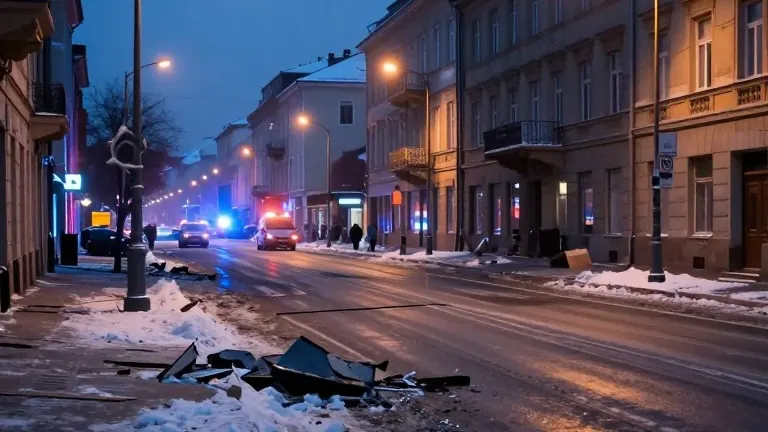
Ukraine’s air force reported that Russia launched 162 drones of various types and one ballistic missile at Ukrainian territory overnight. Prime Minister Sergii Koretskyi stated that these attacks hit ten Ukrainian regions and damaged five major energy substations responsible for transmitting electricity between regions. In response, Russia’s Ministry of Defence announced that its forces shot down 155 Ukrainian drones above eight Russian regions and the Crimean Peninsula. Moscow has intensified its air campaign against Ukraine’s power grid, relying on ballistic missiles and jet-powered drones to exploit Ukraine’s shortage of U.S.-made Patriot interceptors as winter approaches. Ukraine has escalated its own drone strikes on Russian oil refineries.
President Volodymyr Zelenskyy described the talks as constructive and quite substantive. He said the discussions covered humanitarian issues and the substance of security guarantees for Ukraine. Zelenskyy noted that the release of prisoners of war was a priority and that the parties discussed foundations to ensure these guarantees function over the long term. He made these comments on social media and during an appearance at the University of Copenhagen in Denmark.
Jared Kushner, the son-in-law of U.S. President Donald Trump, and U.S. envoy Steve Witkoff are leading the American effort to broker a settlement. Kushner said he believed there were some good ideas to bridge the differences between the two sides. NATO commander U.S. Gen. Alexus Grynkewich, who was present at the talks, pointed to great progress in military-to-military dialogue in a trilateral format. Rustem Umerov, head of Ukraine’s Foreign Intelligence Service and leader of Kyiv’s delegation, thanked the U.S. for its efforts. He said, Our people are waiting to end this war. And we hope that we will achieve the lasting peace for Ukraine.
Umerov said the day began with a meeting between the Ukrainian team, U.S. envoys, and representatives from the United Kingdom, France, Germany, Italy, NATO, and the European Commission. Russia has objected to European involvement in the three-way talks but said EU representatives could join at a later stage. Vladimir Medinsky, head of the Russian delegation, expressed hope the meeting would allow advancement on the path towards peace for the people of Russia and Ukraine. German Chancellor Friedrich Merz said in an interview with ZDF television that he did not have overly high expectations from the talks.
The two governments remain far apart on key elements of a prospective deal. President Vladimir Putin wants Ukraine to pull troops back from Donetsk, Luhansk, Zaporizhzhia, and Kherson, regions Moscow annexed in September 2022 but never fully captured. He also demands Ukraine abandon its bid to join NATO, accept strict limits on its military, and drop restrictions on the Russian language and the Moscow-affiliated Orthodox Church. Putin has warned that Russia will achieve its goals by force if Kyiv refuses to meet these conditions. Zelenskyy rejects voluntary cession of territory and limits on Ukraine’s military. He argues that an immediate ceasefire is the necessary first step and that a direct meeting between Putin and Zelenskyy is the only way to settle territorial issues. Russian Foreign Minister Sergey Lavrov said Tuesday that it would be wiser to discuss the outlines of the future security architecture in Europe first, then a ceasefire in Ukraine.