Taiz families ration food as siege deepens
Fuel costs have quadrupled and water deliveries have halved since both land routes to the Yemeni city were cut off in early October.
By Salma Farouk ·
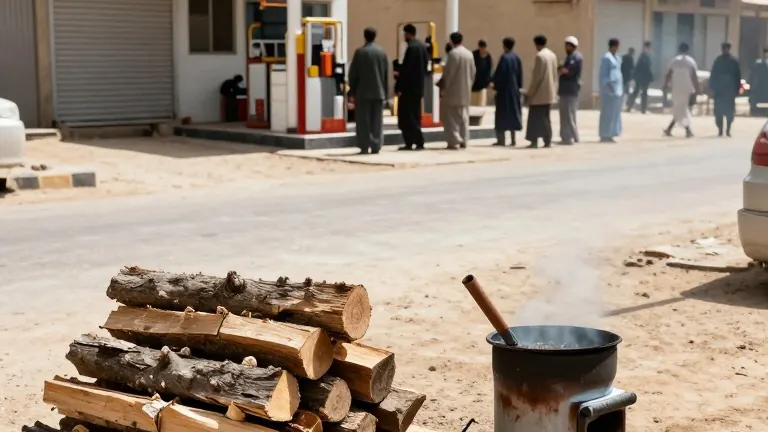
Yousef Farhan, a 39-year-old father of four, sits in a school building in the Wadi al-Qadi zone. His family no longer eats vegetables. For breakfast and dinner, they consume only rice or beans. Farhan used to earn between 4,000 and 5,000 Yemeni riyals a day selling cucumbers from a cart. That income covered a monthly gas cylinder. Now the school is closed, his cart is parked, and the family cooks over firewood.
The change in daily life began in early October. The Houthis captured the town of al-Turbah by October 4. That move closed the Taiz-Al-Turbah-Aden Road, the main supply line for goods. On October 3, government forces closed the eastern al-Houban crossing into Houthi-held territory. They cited attempted Houthi incursions. Taiz, home to about 1 million people, lost both of its land routes.
The United Nations warned on October 20 that road closures and security issues were blocking vital supplies. Prices for available food and fuel have more than doubled. Water production in the city has fallen by half. Fuel stations have been closed since October 5. Al Jazeera price checks show that 20 litres of petrol now cost 120,000 riyals, or $77. That is four times the 30,000 riyals, or $19, charged last year. Diesel for the same volume has risen from 46,000 riyals to 90,000 riyals. A cooking gas cylinder now costs 40,000 riyals, up from 11,400 riyals last year. Bus fares have jumped 150 percent to 500 riyals.
Water scarcity is compounded by these costs. UN officials state that tanker deliveries now cost roughly three times as much as before the fighting escalated. Local authorities say access restrictions keep tankers away from the Al-Dhabab basin, a key drinking water source, due to diesel shortages disrupting pumping.
Sayyun Burhan, 40, describes her family’s routine as living day-to-day. Her husband’s job at a local store has ended. Poor health limits his ability to find other work, yet the family must still pay rent, buy food, and secure water and gas. Her children stay indoors to avoid danger. Burhan said, "They have been deprived of schooling and play."
Health facilities face similar shortages. On October 22, the World Health Organization reported that 42 health facilities in Taiz were reporting severe shortages of fuel, oxygen, medicine, and medical supplies. Fatima Khaled, 55, has kidney failure. She cannot afford repeated trips from her village west of the city or a room near the hospital. She sleeps on the floor of the dialysis hall at Al-Jumhuri General Hospital. Khaled said, "I feel like I am imprisoned here. We have no housing or shelter here. This hall is our shelter."
The city’s infrastructure relies on diesel to power water pumps, hospital generators, and ambulances. Petrol is required for people to reach work and medical care. Cooking gas feeds households and restaurants. With fuel stations closed and prices soaring, the basic mechanics of city life are straining under the weight of the blockade.