Spanish Rail Crash: 69 Dead After Collision Near Toledo
A second major accident in nine months has intensified political disputes ahead of the November 29 election.
By Nathan Brooks ·
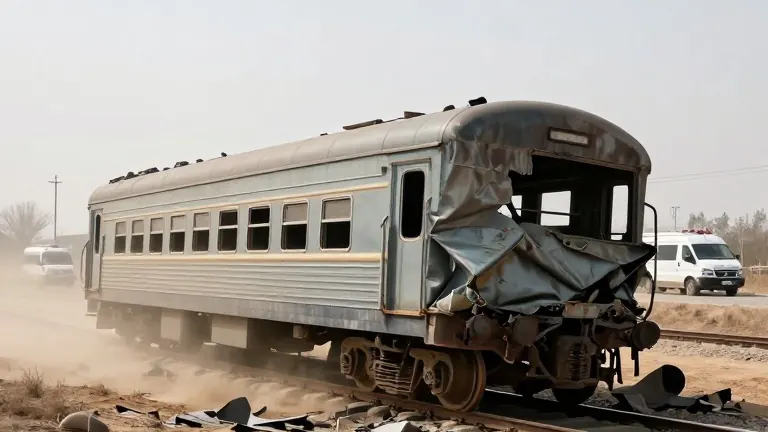
Sixty-nine people died in a train collision on Wednesday morning, 140 kilometers south of Madrid. The incident involves a moving train operated by Spain's national rail company, Renfe, which struck the rear of a stationary train owned by Italy's Iryo. Rescue workers spent Thursday clearing the wreckage, and officials warn the death toll may increase as they account for missing passengers.
This is the second major rail disaster on this route in nine months. A similar collision in January killed 46 people, raising immediate questions about the safety of the network. The current accident has occurred just days before a general election scheduled for November 29, placing intense pressure on Prime Minister Pedro Sánchez's government.
King Felipe visited Toledo on Thursday to meet with 41 injured survivors treated at the city's main hospital. He stated that authorities must study measures to ensure such an event does not happen again. In the same city, approximately 70 relatives of missing persons are staying in a building owned by the local archdiocese. They are receiving counseling while DNA testing is performed on recovered bodies.
Transport Minister Óscar Puente attributed the crash to human error within hours of the accident. He explained that a safety issue had automatically halted several trains on the Madrid-Seville line. According to Puente, an inexplicable decision was made to allow the Renfe train to resume its journey, leading to the collision with the Iryo train minutes later. A leaked audio recording from Madrid's Atocha station supports this account, showing a rail controller giving the order for the train to start moving.
Puente defended the system, noting that mistakes can happen and asserting that Spain's rail network remains safe and comparable to those in neighboring countries. However, the opposition argues that the minister is using human error to mask deeper management failures. Alberto Núñez Feijóo, leader of the conservative People's Party, criticized the response, stating that blaming a single controller treats the event with frivolity.
Santiago Abascal, leader of the far-right Vox party, attacked the government directly. He said the public cannot believe the government's explanations and described the administration as a criminal mafia responsible for the tragedies. The accident threatens to shift the electoral campaign away from housing issues and toward the management of the rail network.
Sánchez's own parliamentary allies are expressing concern. Ada Colau, the lead candidate for the Broad Front electoral ticket, argued that attributing the mistake to one person is unfair and will not solve the underlying problems. She noted that this approach will not prevent future incidents. The Broad Front hopes to help Sánchez form a new left-wing administration, but the accident complicates that effort.
Fátima Báñez, a former conservative government minister, has been identified as one of the victims. Tributes have come from both sides of the political spectrum to honor her. The accident has introduced an extra element of acrimony to an already tense political arena, with the government trailing in polls ahead of the vote.