Zelenskyy cites 109 Russian attacks on Ukrainian bridges to justify Crimea strike
The Ukrainian president stated that Russia targeted domestic infrastructure 109 times before Ukraine struck the Crimean Bridge, arguing the move was a fair response to the structure's role in military logistics.
By News Media House Staff ·
Ukrainian President Volodymyr Zelenskyy has outlined the scale of Russian aggression against Ukrainian infrastructure prior to the recent offensive on the Crimean Bridge. Speaking in Kyiv ahead of a meeting with UK Defence Secretary Wes Streeting, the president highlighted that Russia had attacked Ukrainian bridges 109 times before Ukraine launched its own strike.
Zelenskyy emphasized the distinction between the number of weapons used and the frequency of the assaults. He stated that the figure of 109 refers to the count of attacks rather than the total number of missiles or drones deployed. According to the president, this volume of aggression makes the Ukrainian response on the Crimean structure a fair and justified countermeasure.
The president addressed claims made by Russian leader Vladimir Putin, who had previously asserted that the bridge was not utilized for military logistics. Zelenskyy countered this narrative by pointing to widespread visual evidence. He noted that hundreds of videos from ordinary citizens show tanks, armored vehicles, and artillery moving across the structure. He described the bridge as an open and central logistics route for the militarization of the temporarily occupied peninsula, suggesting that Putin was ignoring these visible facts.
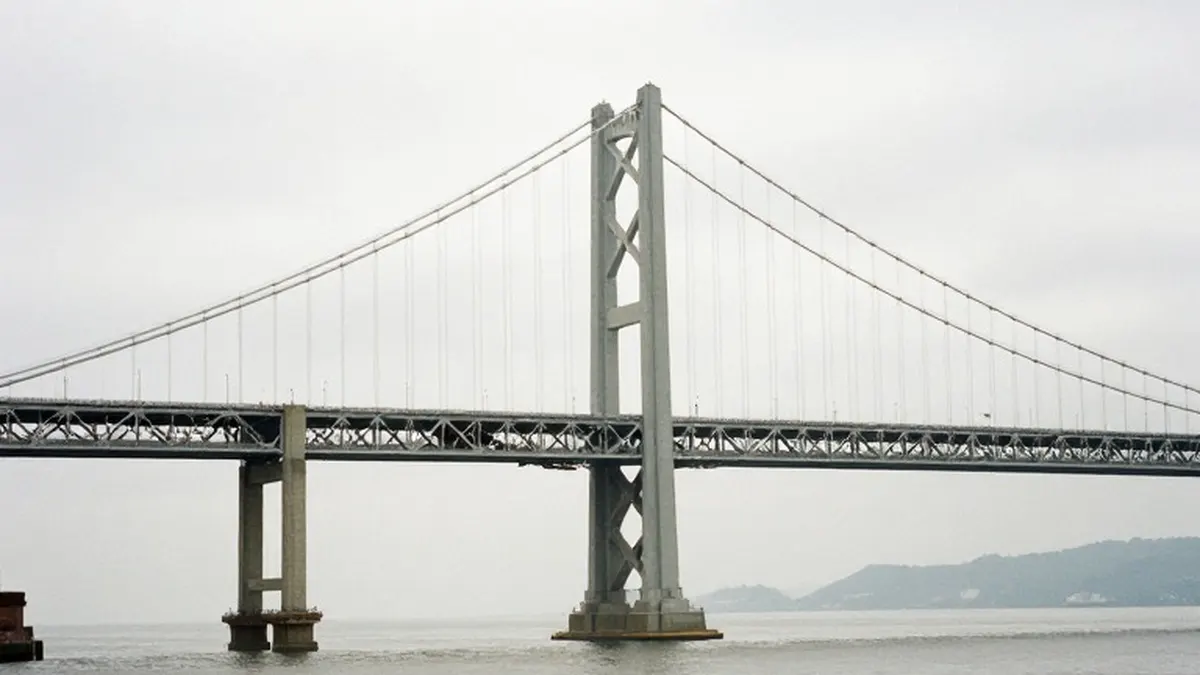
The Crimean Bridge, which spans the Kerch Strait, was constructed by Russia following its 2014 occupation of the Ukrainian peninsula. The structure features separate road and rail crossings connecting Crimea with the Russian mainland. Ukraine has long maintained that the bridge is an illegitimate construction and a valid target for its armed forces due to its strategic importance.
The series of strikes on the bridge began on the morning of November 16. Russian-installed authorities in Crimea reported an initial attack that resulted in traffic restrictions. The following morning, on November 17, reports indicated that a second attack had caused one of the bridge's arches and a section of the roadway to fall into the sea. At that point, the crossing was closed to both rail and road traffic.
Zelenskyy provided specific details regarding the weapons employed during the night of November 16 and 17. He reported that Palianytsia drones were used to strike the road section of the bridge. The railway section was targeted using Neptune missiles, Ruta and FP-1 drones, and a Flamingo missile. This operation was part of a broader strategy to disrupt Russian supply lines.
The Security Service of Ukraine revealed that the strikes were executed as a multi-stage special operation. This effort was planned jointly with other branches of the country's defense forces. The operation successfully destroyed one of the bridge's metal arches along with the road span situated beneath it.
The offensive on the infrastructure continued later in the week. On November 19, the General Staff of the Armed Forces of Ukraine and the Ministry of Defence confirmed a third attack on the Crimean Bridge. This latest strike resulted in further damage to the railway section of the structure.
The sequence of events underscores the intensity of the conflict over the strategic waterway. By detailing the 109 prior attacks on their own bridges, Ukrainian officials aim to frame the destruction of the Crimean Bridge as a reciprocal action against a key asset used to sustain Russian military operations in the region.
Originally published by News Media House