Early Voting: 48 Million Ballots Cast Before Election Day
Registered Democrats are outpacing Republicans in states that report party affiliation, though experts caution against reading that as a forecast.
By Daphne Turner ·

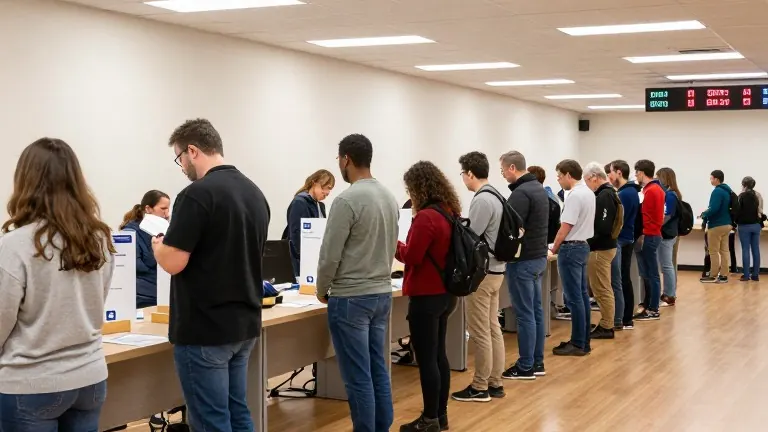
With Election Day set for November 3, roughly 48 million Americans had already cast ballots by Friday, a record for a midterm contest.
The University of Florida's Election Lab counted 47,922,669 early votes nationwide by midday, passing the prior midterm mark of 45.9 million set in 2022. The surge is concentrated in states with close Senate races covering 35 seats, contests that will help determine control of the chamber during the final two years of Donald Trump's presidency.
In Texas, more than 6 million people had voted early through Wednesday, with in-person turnout running about 50 percent above 2022 levels, according to official figures. North Carolina's election board reported early voting up nearly 37 percent from the same point four years ago. South Carolina surpassed its entire 2022 early vote total on Monday, with five days of early voting still to come.
In states that track voter party registration, Democrats accounted for about 44 percent of early voters, compared with 31 percent for Republicans and 25 percent for unaffiliated or minor-party voters, the Election Lab data showed. Michael McDonald, the University of Florida political scientist who oversees the lab, reported higher participation among Black and Hispanic voters in states reporting racial and ethnic data, particularly in heavily Hispanic communities along the Texas-Mexico border.
Analysts warn against treating the party breakdown as a result prediction. A voter's registration does not indicate which candidate received the ballot, and tens of millions more Americans are expected to vote on Tuesday. Republicans have tended to turn out in larger numbers on Election Day in recent cycles, a pattern that could shrink or reverse the early Democratic edge. Higher early turnout also does not automatically mean higher overall turnout, since some voters who cast ballots early may have otherwise voted later anyway.
McDonald said the figures reflect participation patterns rather than candidate preference: "The party registration of a voter does not tell us which candidates they supported."